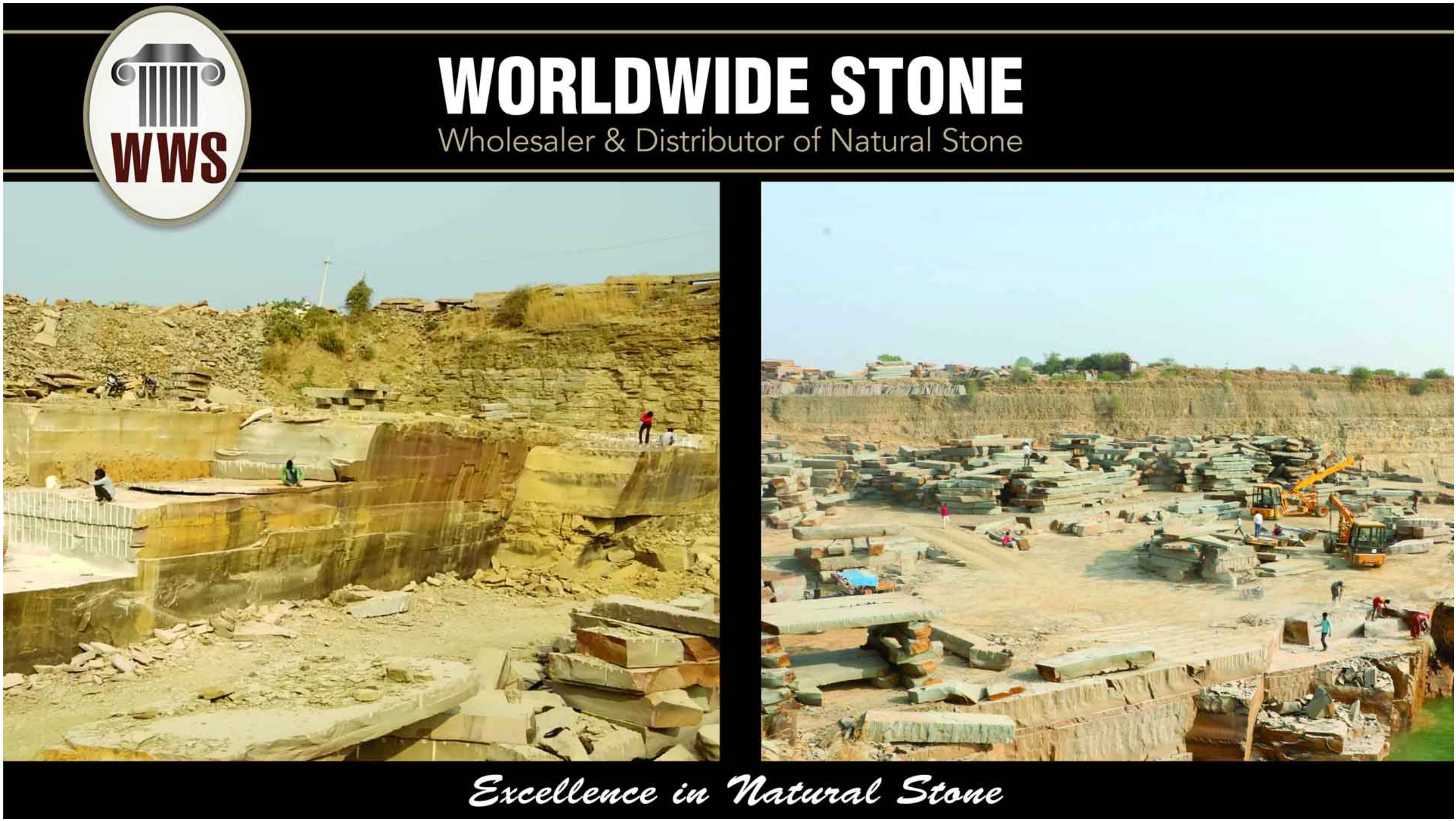
Article: Natural Stone Quarries in India: Major Global Source of Granite, Marble, Sandstone & More

Natural Stone Quarries in India: Major Global Source of Granite, Marble, Sandstone & More
India has been one of the world’s most important sources of natural building stone for centuries. From the marble that built the Taj Mahal to the granite used in modern skyscrapers across North America, Europe, and the Middle East, Indian quarries supply an extraordinary range of durable and beautiful stone materials.
Today, India remains among the largest producers and exporters of natural stone in the world, with hundreds of active quarries producing granite, marble, sandstone, limestone, slate, and quartzite.
Indian stone is shipped to over 90 countries, supplying large construction projects, luxury residential architecture, and landscape design markets worldwide.

This guide explores:
- Major stone quarry regions in India
- The most important stone types produced
- Leading quarry operators and stone exporters
- Global markets for Indian stone
- Common finished products and applications
- Emerging trends shaping the global stone supply chain
The Global Importance of India’s Stone Quarry Industry
India’s geological diversity has created vast reserves of natural building stone across the country.
The industry includes hundreds of quarry clusters and thousands of processing plants producing blocks, slabs, tiles, and architectural stone products.
The Indian natural stone market includes five dominant materials:
- Granite
- Marble
- Sandstone
- Limestone
- Slate & quartzite
Granite and marble currently represent the largest share of production because of their widespread use in residential and commercial construction.
Major quarry zones are concentrated in:
- Rajasthan
- Karnataka
- Andhra Pradesh
- Tamil Nadu
- Telangana
- Gujarat
- Madhya Pradesh
These regions supply both domestic infrastructure projects and international stone markets.
Map of Major Natural Stone Quarry Regions in India
Each geological region produces distinctive stone colors and patterns that are recognized globally.
For example:
|
Region |
Major Stone Types |
|
Rajasthan |
Marble, sandstone, limestone |
|
Karnataka |
Premium granite |
|
Andhra Pradesh |
Black & galaxy granite |
|
Tamil Nadu |
Dark granite varieties |
|
Gujarat |
Marble and limestone |
|
Madhya Pradesh |
Sandstone |
Rajasthan: The Heart of India’s Marble & Sandstone Industry
Rajasthan is widely considered India’s most important stone mining region.
The state contains massive deposits of marble, sandstone, and limestone and is home to some of the country’s largest stone-processing hubs such as Kishangarh and Udaipur.
Key Stones from Rajasthan
- Makrana White Marble
- Rainforest Brown Marble
- Kota Limestone
- Jodhpur Sandstone
- Dholpur Red Sandstone
Makrana Marble — The World’s Most Famous Quarry
Makrana marble is one of the oldest continuously quarried marbles in the world.
It was used to build:
- The Taj Mahal
- Victoria Memorial in Kolkata
- Dilwara Jain Temples
The region produces millions of tons of marble annually and supports over 100,000 workers in surrounding villages.
Markets
Rajasthan stone exports primarily go to:
- United States
- Canada
- United Kingdom
- Germany
- UAE
Sandstone from Rajasthan is especially popular for:
- paving
- wall cladding
- landscaping
- heritage architecture
South India: Granite Capital of the World
Southern India produces some of the highest quality granite varieties globally.
The states leading production include:
- Karnataka
- Andhra Pradesh
- Telangana
- Tamil Nadu
These regions supply large granite blocks used for slabs and monuments worldwide.

Major Granite Varieties
Popular Indian granite types include:
- Black Galaxy
- Absolute Black
- Tan Brown
- Steel Grey
- Kashmir White
- Vizag Blue
India hosts hundreds of granite quarries, with granite representing the majority of quarry operations.
Andhra Pradesh: Home of Black Galaxy Granite
One of the world’s most famous decorative granites, Black Galaxy, comes from quarries in Andhra Pradesh.
This material is widely used for:
- kitchen countertops
- luxury flooring
- memorial monuments
- commercial building interiors
The nearby town of Chimakurthy has been a major granite processing center for decades.
Hundreds of polishing factories process granite blocks from surrounding quarries before exporting slabs worldwide.
Karnataka: Premium Granite Deposits
Karnataka produces many of India’s highest-value granite materials.
Examples include:
- Paradiso granite
- Multicolor granite
- Himalayan blue granite
Granite quarrying in this region dates back centuries and has supported local stone carving traditions for temple construction.
Tamil Nadu: Government-Operated Granite Quarries
Tamil Nadu is another major granite producer.
The state government operates stone quarries through Tamil Nadu Minerals Limited (TAMIN), a government-owned mining corporation founded in 1978.
TAMIN oversees:
- quarry leases
- granite extraction
- processing facilities
- export operations
India’s Sandstone Belt
While granite and marble dominate export markets, India’s sandstone industry is also globally significant.
Major sandstone quarries are located in:
- Rajasthan
- Madhya Pradesh
- Uttar Pradesh
Famous Sandstones
- Teakwood sandstone
- Rainbow sandstone
- Mint sandstone
- Dholpur red sandstone
The sandstone city of Hindaun is a major trade center exporting stone used in historic buildings such as Delhi’s Red Fort.

Other Natural Stones from India
In addition to granite and marble, India produces many other building stones.
Limestone
Often used for flooring, wall cladding, and landscaping.
Popular variety:
- Kota limestone
Quartzite
Used for decorative walls and flooring.
Slate
Common in roofing and outdoor landscaping.
Basalt & Lava Stone
Used in modern architectural applications and paving.
Major Natural Stone Companies in India
India’s quarry industry includes thousands of small operators and several large vertically integrated companies.
Leading players include:
- Aro Granite Industries
- Pokarna Limited
- Madhav Marbles and Granites
- Ramco Cements
These companies operate quarry sites, processing plants, and international export operations.
Other major exporters include:
- Pacific Industries
- Stonex India
- Regatta Universal Exports
- Rachana Stones
From Quarry to Global Construction Projects

Step 1 — Extraction
Stone is extracted using:
- diamond wire saws
- drilling
- controlled blasting
Large blocks can weigh 20–30 tons each.
Step 2 — Block Transportation
Blocks are transported to processing factories near quarry regions.
Step 3 — Processing
Blocks are cut into:
- slabs
- tiles
- dimensional stone
Advanced factories use gang saws and multi-blade cutting machines.
Step 4 — Finishing
Popular finishes include:
- polished
- honed
- flamed
- leathered
- bush hammered
Step 5 — Export
Stone slabs and finished products are shipped globally in containers.
Key Export Markets for Indian Stone
Indian stone exports reach construction markets worldwide.
Major import regions include:
|
Market |
Key Uses |
|
United States |
countertops, landscaping |
|
Canada |
thin veneer & paving |
|
Europe |
historic restoration |
|
Middle East |
luxury architecture |
|
Australia |
residential construction |
Growing demand for natural materials in architecture continues to support global exports.
Common Finished Products from Indian Quarries
Stone extracted from quarries becomes a wide range of finished goods.
Architectural Stone
- wall cladding
- building facades
- columns
- window surrounds
Interior Applications
- countertops
- flooring
- wall panels
- staircases
Landscaping Stone
- paving
- garden walls
- pool surrounds
- retaining walls
Dimensional Stone
- monuments
- statues
- memorials
Sustainability and Challenges in Quarrying
Despite its global importance, the industry faces challenges.
These include:
- environmental regulations
- dust control requirements
- land restoration policies
- worker safety
Some quarry regions have also faced pollution concerns and regulatory enforcement actions in recent years.
However, improvements in machinery and cutting technology are helping reduce waste and increase efficiency.
Future Trends in India’s Stone Industry
Several trends are shaping the future of the industry.
Technology Adoption
Automation and precision cutting are improving stone recovery and reducing waste.
Global Design Trends
Natural materials are becoming increasingly popular in architecture and sustainable construction.
Value-Added Processing
More companies are investing in finished stone products rather than exporting raw blocks.
Expanding Export Markets
Demand continues to grow in:
- North America
- Europe
- Middle East
- Southeast Asia
Why Architects and Builders Choose Indian Stone
Indian natural stone remains popular globally because of its:
- wide color range
- durability
- competitive pricing
- large quarry reserves
- established export infrastructure
The combination of geological diversity and centuries of stone craftsmanship has made India one of the world’s most important sources of natural building stone.
Final Thoughts
From the white marble quarries of Makrana to the granite hills of southern India, the country’s natural stone resources continue to shape architecture around the world.
Whether used in luxury homes, commercial towers, or historic monuments, Indian stone has become a foundational material in global construction.
For architects, designers, and builders seeking durable and distinctive natural materials, India’s quarries remain one of the most important sources of supply in the international stone market.